

As a Spanish tutor, languages fascinate me, especially when two seem worlds apart on the map, but still share some surprisingly fun things. Spanish and Georgian (yes, the language spoken in Georgia, the country at the crossroads of Europe and Asia!) are a perfect example. Most people wouldn’t put them side by side, but if you dig a bit deeper, you find little connections that might just surprise you.
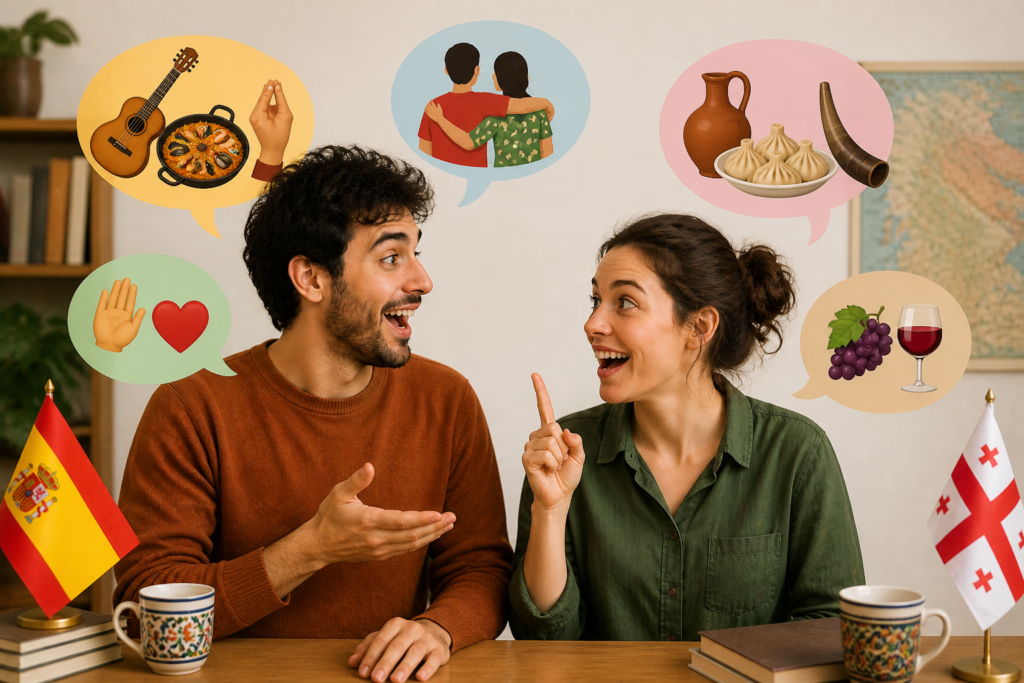
Why Compare Spanish and Georgian?
Students sometimes ask me why anyone would look for similarities between Spanish, an official language in 21 countries, and Georgian, which has about four million speakers. The thing is, checking out these links not only makes learning more interesting, it also gives you cultural insights and sometimes even helps you remember a tricky phrase or grammar point.
Both languages developed in unique environments. Spanish comes from Latin roots mixed with Moorish influence, while Georgian comes from its own ancient language family, full of unique letters and pronunciation. Still, there are spots where their worlds overlap.
1. Shared Love for Vowel Harmony
One thing I always point out is how both Spanish and Georgian are pretty vocal when it comes to, well, their vowels. Spanish is fairly famous for its simple five-vowel system: a, e, i, o, u. Every word has a sort of rhythmic clarity because of that, and I always tell beginners this consistency is a blessing.
Georgian technically has more vowels, but it’s similar in that vowels play a huge role. What’s pretty handy is, neither language does those awkward vowel clusters that tie your tongue in knots. When you look at spoken Georgian next to Spanish, you notice a smooth, rolling quality. If you’re used to one, even listening to the other can feel oddly natural, even if the words themselves are unfamiliar.
2. Step-by-Step Sound Structure
Pronunciation in both languages follows a pretty predictable pattern. Spanish, as any beginner will tell you, is a write-what-you-say, say-what-you-write kind of language. Georgian does the same, just in its own beautiful script. There’s a direct link between spelling and sounds, which is not always the case with other languages like English or French.
So if you’re learning Spanish and start looking at Georgian, you’re not going to spend hours trying to guess at silent letters or strange exceptions. Once you’ve got the alphabet down (and, admittedly, Georgian’s is its own adventure), you can start reading out loud with a good degree of confidence.
3. Surnames that Tell a Story
The cultural habit of using surnames to share your heritage or family is something the Spanish speaking and Georgian cultures have in common, and I get a kick out of explaining this. Think about all those Spanish surnames ending in “-ez” (like González, Martínez): these come from patronymics. Basically, they mean “son of” so-and-so.
Georgian does something similar, but with endings like “-shvili” (meaning “child of”) or “-dze” (also linked to ancestry). This means that both Spanish and Georgian last names are little clues about your ancestors, just in their own style.
4. Cultural Attitudes About Formality
Formality is a big deal in both Spanish and Georgian, especially in how people address each other. In Spanish, there’s that whole tú versus usted dynamic (and don’t get me started on vos in Argentina or vosotros in Spain). Picking the wrong one can make things awkward or even seem disrespectful.
Georgian also takes respectful address seriously. There’s a careful balance between showing politeness and knowing when to switch to informal speech. Certain pronouns and verb forms change depending on the relationship and level of respect, similar to the choices Spanish speakers have to make.
Whether you’re in Madrid or Tbilisi, you’ll notice people being pretty thoughtful when they address someone older, a guest, or a stranger. If you’re learning both languages, understanding these cultural rules is really important, otherwise, you can come across much ruder than you mean!
5. Many Ways to Say “Cheers!”
Here’s a fun one for social learners: both Spanish and Georgian are cultures where sharing a drink, be it wine, beer, or something local, is a moment to bond. And both have their own ways of saying “cheers.”
In Spanish, you quick draw a cheerful ¡Salud! when you toast, meaning “to your health.” In Georgia, you’ll commonly hear Gaumarjos! (გაუმარჯოს), which is kind of the same idea: wishing your company good health, happiness, and luck. If you ever visit, don’t be surprised if toasting is a whole little ceremony, especially in Georgia, where it goes alongside long, poetic speeches and lots of wine.
Are you learning Georgian and Spanish? Tips for Multilingual Learners
Learning two unrelated languages side by side sounds tough, but I always say it’s totally doable with the right mindset and strategy. Here are some practical tips to help you stick with it:
- Find audio resources: Listening to both languages helps train your ear for those easy to spot vowel patterns and direct pronunciation. YouTube and language learning apps like Utalk have options for both Spanish and Georgian.
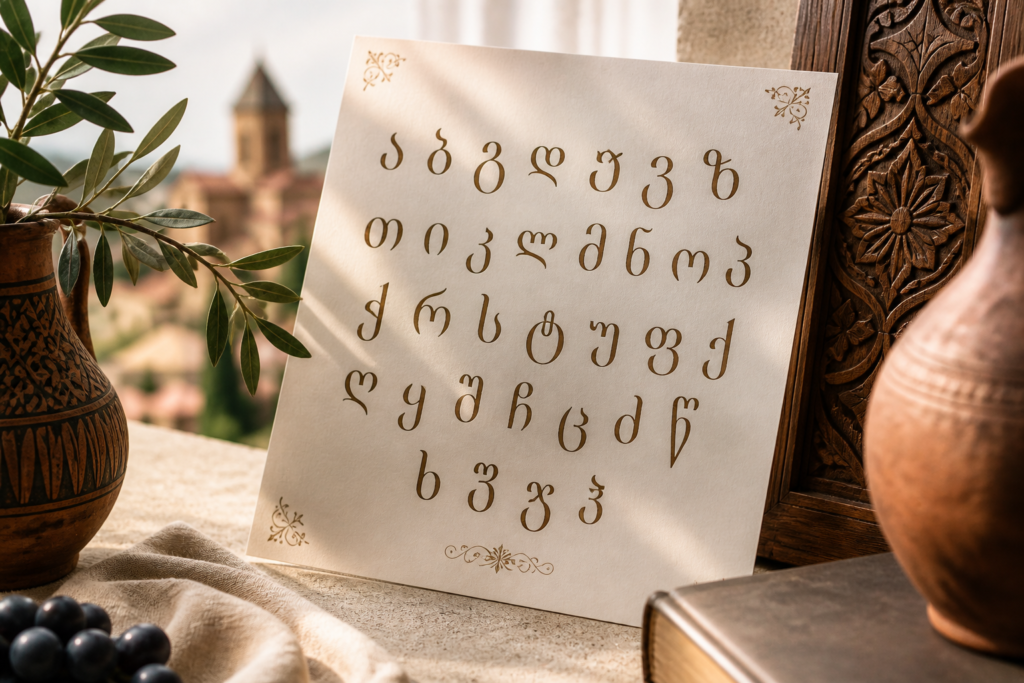
- Write out the alphabets: Even if you’re just doodling, copying out Georgian letters next to Spanish is a fun way to get used to the look and feel of the sounds.
- Mix up your practice: Alternate days focusing on one language, then the other. This keeps your brain fresh and helps you switch gears smoothly.
- Find a tutor: A tutor isn’t just someone who teaches you a language; they’re the person who introduces you to another culture. Plus, a tutor will make sure you stay committed, and it’ll be harder to make excuses for not learning when you have someone to be accountable to. Preply can be a great option for finding a tutor for both Spanish and Georgian.
Common Questions About Spanish and Georgian Similarities
Q: Are there any words that are spelled the same in both languages?
A: You’ll find some international borrowings, like “kilo” or “metro,” but unlike closely related languages (like Spanish and Italian), shared vocabulary is rare. The fun is really in the patterns, not the actual words.
Q: Is Georgian grammar as hard as people say?
A: Georgian takes a bit to get used to, mainly because it does things most European languages don’t. But if you’re comfortable with Spanish, you’re already used to grammar rules that need practice (like verb conjugations). Give yourself time and take it step by step.
Q: Is it confusing to learn both at once?
A: It can be challenging, but since the languages are unrelated, you’re unlikely to mix up too much vocabulary. The brain is good at sorting when things are clearly different, so switching gears becomes a skill in itself. Setting clear goals, like mastering the basics before jumping into advanced grammar, helps a lot.
Wrapping up
Spanish and Georgian look different on the surface, but when you look for those small, fun connections, your learning experience gets a lot richer. Keep exploring, stay open to surprises, and your language skills will grow in ways you never expected!
Guess what? When you click and buy through our links, you’re not just boosting your Spanish skills—you’re supporting us at no extra cost. It helps us keep delivering top-notch tips and resources to you. It’s a win-win for both of us!